
Optocouplers
3 products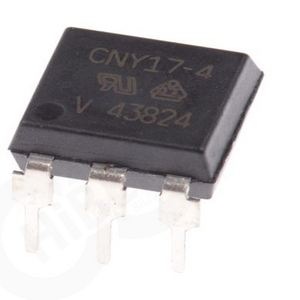
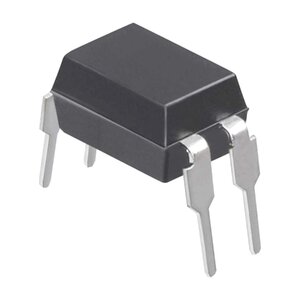
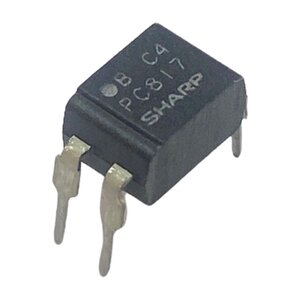
Optocouplers (also called optoisolators) are essential components that transfer signals between electrically isolated circuits using light. Built around an LED and a photodetector—such as a phototransistor, photodiode, or phototriac—they provide galvanic isolation, eliminating ground loops and protecting low-voltage control electronics from high-voltage transients. They are widely used in industrial automation, power supplies, motor drives, and communication interfaces where signal integrity and safety are critical.
Optocoupler Types and Typical Models
- Transistor Output: The most common type for analog and digital signal isolation. Popular models include 4N35, PC817, and H11A1. Ideal for low- to medium-speed switching and level shifting.
- Logic Output (High-Speed): Designed for data rates in the MHz range, suitable for isolating I²C, SPI, and RS-232 lines. Examples: HCPL-2630, H11L1.
- Triac Driver Output: Optimized to drive power triacs directly from low-level logic, switching AC loads in lighting, heating, and motor control. Models like MOC3021 and MOC3063 (with zero-crossing) are standard choices.
- Darlington Output: Provide high current gain, allowing a very small input current to drive relays or heavier loads with minimal external circuitry. Examples: 4N33, PC825.
Selection Criteria and Design Tips
Pay attention to these parameters to ensure reliable performance:
- Current Transfer Ratio (CTR): The ratio of output current to input current, expressed as a percentage. A low CTR may prevent the output transistor from saturating; a higher CTR allows switching with lower LED current. Always design for the minimum CTR specified in the datasheet.
- Isolation Voltage (Viso): The maximum RMS voltage the device can withstand between input and output (typically 2500–5000 Vrms). For mains-connected projects, aim for at least 3750 Vrms rating.
- Switching Speed: Check rise/fall times and maximum data rate. For communication busses above 1 Mbps, select a logic output optocoupler.
- Number of Channels and Package: Dual and quad options save PCB space. Choose between through-hole (DIP) and surface-mount (SMD) packages according to your manufacturing process.
Common pitfalls include incorrect LED current-limiting resistor calculations, exceeding the maximum LED current, and forgetting the necessary pull-up/down resistors on the output side. Matching the right optocoupler with properly dimensioned passive components extends both signal integrity and circuit lifetime.


