
Diodes
62 products
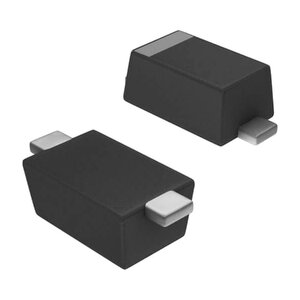
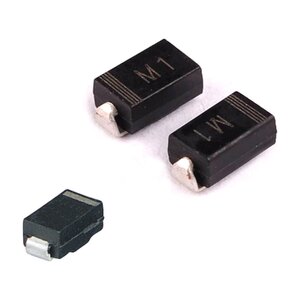
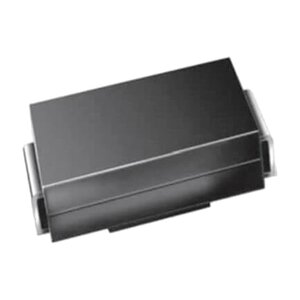
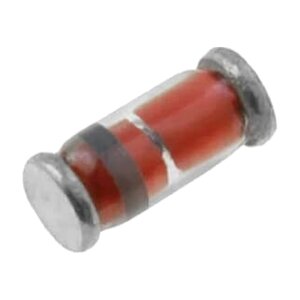
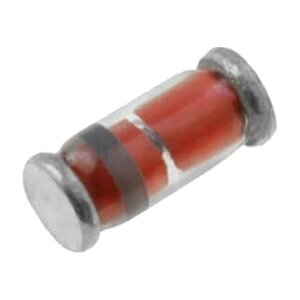
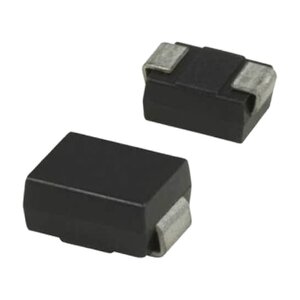
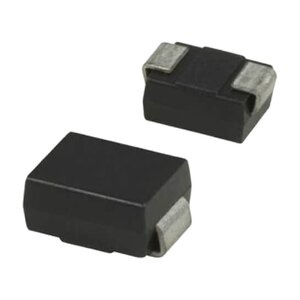
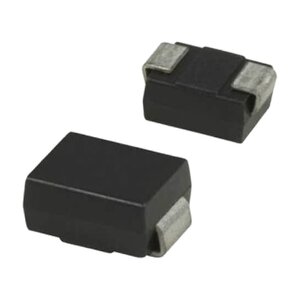
What is a Diode?
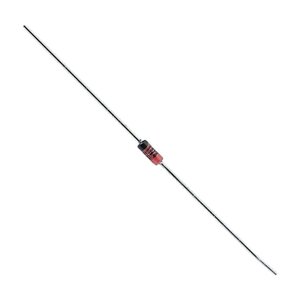
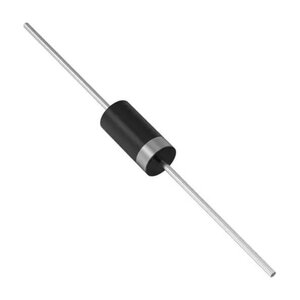
A diode is a two-terminal semiconductor device that conducts current primarily in one direction (from anode to cathode). As one of the most fundamental electronic components, diodes play a crucial role in rectification, protection, signal processing, and light emission/detection applications.
Diode Types and Key Parameters
- Standard Silicon Diodes: General-purpose rectification and switching; popular series include 1N4001-1N4007, 1N4148.
- Schottky Diodes: Low forward voltage drop (0.2-0.4 V) and fast recovery time; ideal for power supplies, high-frequency circuits.
- Zener Diodes: Controlled breakdown at a specific reverse voltage, used for voltage regulation and reference.
- LED (Light-Emitting Diode): Converts electrical energy into light; selected based on color, wavelength, viewing angle, and current rating.
- Photodiodes: Convert light into current; used in optical sensors, communication, and position detection.
- TVS (Transient Voltage Suppressor) Diodes: Protection against ESD and voltage spikes.
- Varactor Diodes: Voltage-controlled capacitance; used in oscillators and tuned circuits.
How to Choose the Right Diode for Your Project
When selecting a diode, pay close attention to the following parameters:
- Maximum Forward Current (IF): The continuous current the diode can handle; choose at least 20% higher than your load current.
- Reverse Voltage Rating (VR or PIV): The maximum reverse voltage the diode can withstand; should exceed the peak circuit voltage.
- Forward Voltage Drop (VF): Especially critical in battery-powered or low-voltage circuits; Schottky diodes are preferred for low VF.
- Switching Speed / Recovery Time (trr): Fast diodes are mandatory for high-frequency switching (SMPS) or RF circuits.
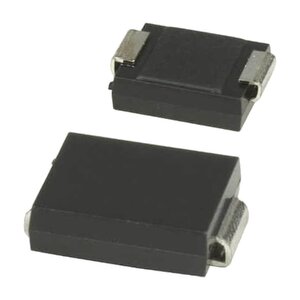
- Package Type and Thermal Management: Surface-mount (SMD) or through-hole mounting; heatsink requirements for high-current applications.
For example, a full-wave rectifier circuit can use standard 1N4007 diodes with high PIV and 1A capacity, while the output of a DC-DC converter benefits from Schottky diodes for low losses. When selecting a Zener diode, calculate the Zener voltage (VZ) and power rating (PZ), and consider dynamic resistance for regulation quality.


