
Signal Generators
2 products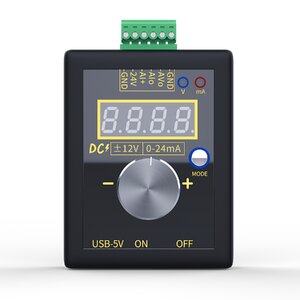
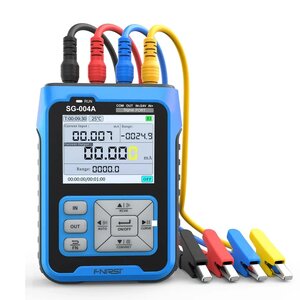
Signal generators are essential laboratory instruments used for electronic circuit testing and measurement. By producing signals with specific frequency, amplitude, and waveform, they enable analysis of circuit behavior, component tolerance verification, and debugging. This category includes function generators (sine, square, triangle waves), arbitrary waveform generators (user-defined waveforms), and RF signal generators (high-frequency, modulated output).
Selection Criteria
- Frequency range: Determine the maximum frequency you need. Audio applications may only require up to 20 kHz, while RF projects can demand GHz levels.
- Waveform variety: Besides basic sine, square, and triangle waves, the ability to generate arbitrary waveforms is critical in many advanced tests.
- Amplitude and output impedance: The output level (Vpp) and impedance (typically 50 ohms) must match the input impedance of the circuit under test. Mismatches cause reflections and inaccurate measurements.
- Modulation and sweep capabilities: Features like AM, FM, PM modulation and frequency sweeping are especially important for RF and communication circuits.
Before purchasing, review the datasheet for technical parameters such as frequency stability, harmonic distortion, and phase noise. Also, pay attention to impedance matching of interconnecting cables and connectors (BNC, SMA, etc.); improper connections can degrade signal integrity. Signal generators provide a reliable reference source for everything from circuit design to production line testing.


