
LCR & ESR Meters
3 products
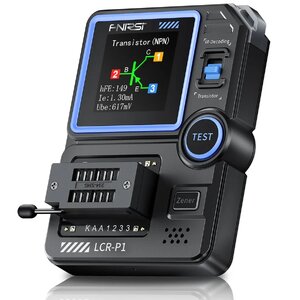
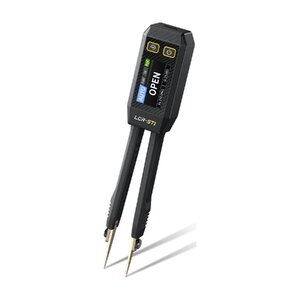
LCR and ESR meters are precision instruments designed to measure the fundamental parameters of passive electronic components. In this category, you will find a broad range of devices from handheld portable units to benchtop high-accuracy systems. LCR meters directly measure inductance (L), capacitance (C), and resistance (R), while also computing derived parameters such as impedance, phase angle, and quality factor (Q). ESR meters focus on measuring the equivalent series resistance of capacitors, enabling the detection of aged or faulty components even when their nominal capacitance appears normal.
Typical applications
These instruments are indispensable in repair shops, laboratories, production line quality control, and advanced hobby projects. In motherboard repair, power supply servicing, and audio equipment restoration, measuring capacitor ESR in‑circuit provides a fast way to pinpoint failed parts. LCR measurements are also used for coil and transformer characterization, capacitor bank testing, and determining cable capacitance or inductance.
Selection criteria
- Test frequency: Common options include 100Hz, 120Hz, 1kHz, 10kHz, and 100kHz. High‑frequency models are needed for surface‑mount components and RF applications.
- Measurement range and accuracy: Choose a model that covers your expected component values with sufficient precision.
- ESR capability: Models that offer direct ESR measurement (or an adapter) are a major advantage for repair work.
- Display and usability: A large LCD, graphical mode, automatic component recognition, and built‑in battery improve field usability.
Common mistakes include measuring ESR without discharging the capacitor or with it still in circuit, which can yield false readings and damage the meter. In LCR measurements, neglecting open/short compensation (calibration) leads to significant errors, especially with low‑value components.


