
ESD Protection Equipment
10 products

The Importance of ESD Protection Equipment
Electrostatic discharge (ESD) is an invisible threat that can cause irreversible damage to electronic circuits. Semiconductor components, integrated circuits, and sensitive boards are extremely vulnerable to static electricity. ESD protection equipment eliminates this risk by safely grounding or neutralizing static charges that build up in the work environment. In electronics manufacturing, repair, labs, and hobby workshops, using this equipment directly impacts product quality and circuit reliability.
Types of ESD Equipment and Selection Criteria
ESD protection equipment covers everything from personal attire to work surfaces. When choosing the right product, consider your application area and durability requirements.
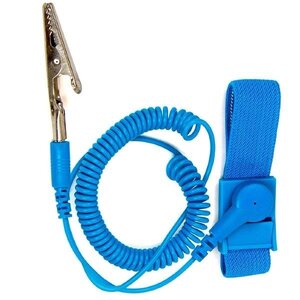
- Antistatic Wrist Straps: Both corded and cordless models are the most practical way to ground the body's static charge. When selecting a wrist strap, pay attention to the conductive fabric or metal plate quality ensuring continuous skin contact, and make sure the grounding cord has a 1 MΩ resistor.
- Antistatic Mats and Bench Covers: While working on a bench, these prevent static buildup and also provide cushioning for dropped devices. Two-layer (dissipative) mats are the most preferred; the top layer dissipates static charges, while the bottom layer includes a grounding connection.
- ESD Bags and Packaging Materials: Metalized bags (pink, black, or silver) that work on the Faraday cage principle are ideal for transporting and storing sensitive boards. The protection level (static shielding, moisture barrier) is critical when choosing.
- Antistatic Clothing and Footwear: Lab coats, gloves, and ESD shoes provide a continuous discharge path from the body to ground, even while walking. Surface resistance should be in the range of 10⁵ – 10¹¹ ohms.
- Ionizers and Grounding Accessories: Ionizers neutralize static charges in the ambient air, eliminating friction-induced charges on material surfaces. Grounding cords, outlet adapters, and testers are necessary to periodically verify that the system works correctly.
Building a quality ESD protection setup is not just about purchasing equipment; regular testing and maintenance are part of the process. Checking wrist strap and grounding connections at least once a day, cleaning mat surfaces, and monitoring wear ensures maximum long-term protection. A common mistake is failing to verify that the grounding point is truly connected to earth, or continuing to use an old mat that has lost its conductivity.


